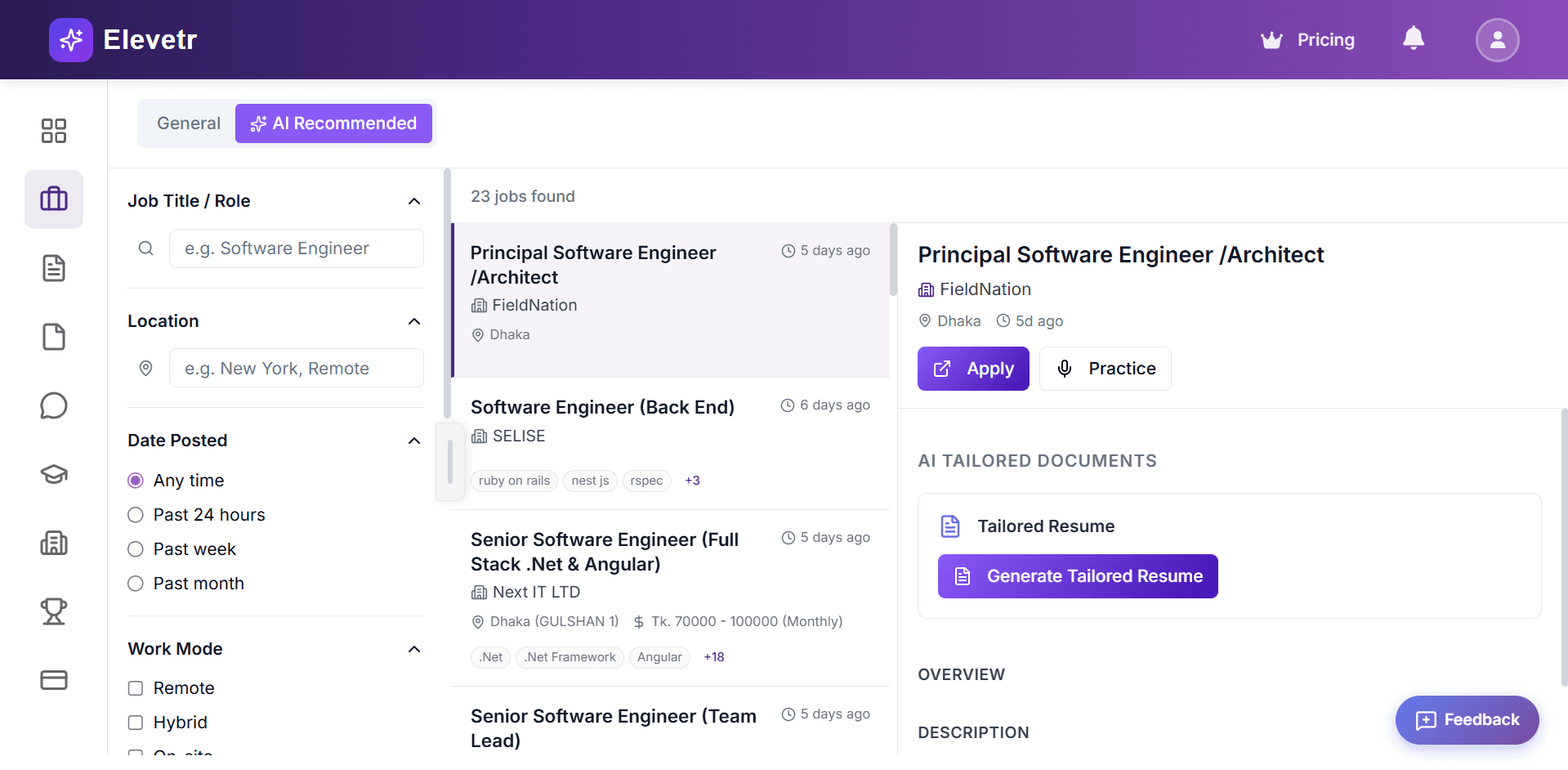
Traditional hiring pipelines are usually a fixed, one-size-fits-all sequence: resume screen, phone screen, onsite, offer. Elevetr Jobs replaces that with a hiring process each company actually configures for the role — an ordered sequence of rounds, each with its own type, content, and pass criteria.
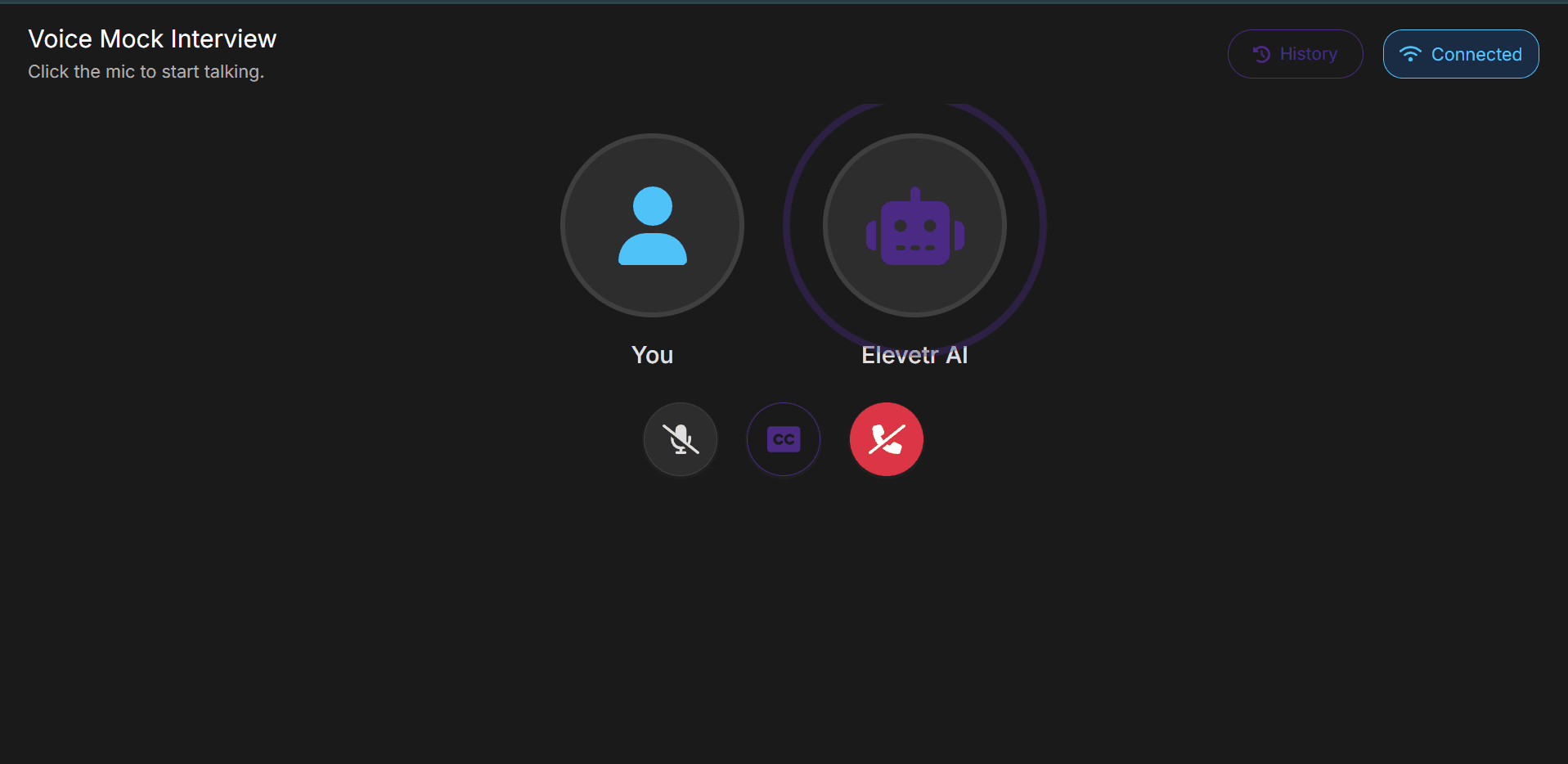
Every process starts the same way: an AI interview
Whatever else a company adds to their pipeline, the first round is always an AI-conducted interview. It's a deliberate design choice: a short, structured, always-on conversation gives every candidate a fair, consistent first look, before anything more specialized — a coding round, a case study — gets scheduled. The AI interviewer asks role-relevant questions, adapts follow-ups based on what the candidate actually says, and hands off a scored transcript for the next stage.
Rounds a company can add after that
- Live Coding — a real editor, real problems, reviewed by a human since there's no execution sandbox involved.
- System Design — a structured conversation about architecture trade-offs, always human-reviewed.
- Quiz & Analytical Reasoning — auto-scored on submission for a fast, objective read on fundamentals.
- Personality Test — tallied into a trait profile rather than a single pass/fail score.
- Assignment, Case Study, Portfolio — candidate-authored work, given an AI first-pass read, but never auto-decided; a human always sets the final score.
- Roleplay — a scenario-based voice conversation, scored the same way as the AI interview.
How candidates actually move forward
For the two round types built for it — AI Interview and Roleplay — a company can turn on automatic advancement: if a candidate's score clears the bar the company set, they're invited to the next round the moment scoring finishes, no recruiter has to click anything. Every other round type is reviewed by a person before the candidate moves on — even the auto-scored quiz — because deciding who continues is treated as a real hiring decision, not something to fully automate away.
Why we built it this way
The goal isn't to remove humans from hiring — it's to make sure the AI does the repetitive, consistent, high-volume work (the first screen, the objective scoring) so the humans on the hiring team spend their time on the judgment calls that actually need a person: reading a system design transcript, deciding if an assignment shows real skill, making the final call on who gets the offer.